
The Climate Project That Didn’t Start in Fiji — But Was Shaped by a Fijian Youth Leader
05 Jan 2026
Climate change stories from the Pacific usually follow a familiar path: rising seas, stronger storms, frontline communities.
This one begins somewhere else.
Last year, a Fijian youth leader quietly helped design a climate resilience project that will be piloted not in the Pacific, but in Pakistan — one of the world’s most climate-vulnerable countries — with young women leading the response.
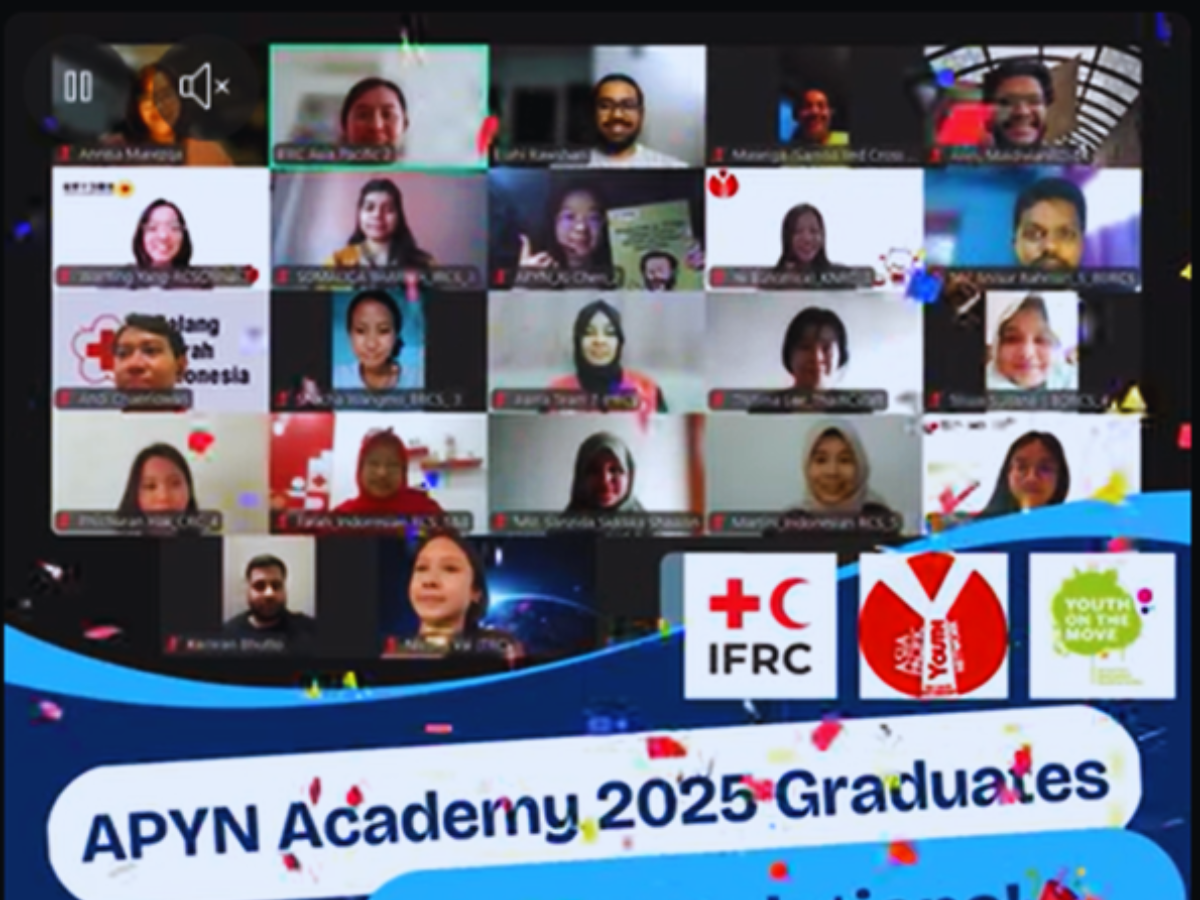
Senibiau Railala, Chair of the Fiji Red Cross Society Youth Commission, was selected to join the Asia Pacific Youth Network (APYN) Academy, a six-month regional leadership programme that brought together youth from China, Bangladesh, Malaysia, Pakistan and Fiji. The academy concluded in December, but its most ambitious outcome is only just beginning.
Rather than focusing on abstract policy or awareness campaigns, participants were tasked with a harder challenge: design a real, workable solution to a real climate problem, one that could function in complex cultural and social environments.
What emerged was She Leads the Change — a women-centred climate resilience initiative that places young female Red Crescent volunteers at the centre of community-level climate action. The project proposes the creation of a Women’s Climate Action Network (WCAN), equipping women with practical tools to lead climate conversations, design micro-projects, and translate climate risks into everyday household decisions.
The pilot will launch in Lahore, Pakistan — a deliberate choice. Pakistan is ranked among the world’s most climate-vulnerable nations, and women there often face compounded risks due to mobility restrictions, limited access to information, and exclusion from decision-making spaces. Yet, as the project recognises, women also hold deep local knowledge about household safety, caregiving, water use and community resilience.
For Senibiau, contributing to the project meant bringing a Pacific lens into a very different context.
“Climate impacts look different across the region,” she reflects, “but the gaps in representation are often the same. Women experience the worst effects, yet their voices are rarely centred in solutions.”
Drawing on approaches learned through the academy — including human-centred design, storytelling, negotiation and strategic foresight — the regional team developed a model that is intentionally low-cost, locally owned and replicable. It includes women-only dialogue spaces, community adaptation circles, and a practical household toolkit designed for climate stresses such as heatwaves, floods and water scarcity.
While the pilot is set in South Asia, the ideas resonate strongly in the Pacific.
As Chair of the Fiji Red Cross Society Youth Commission, Senibiau has long advocated for youth leadership that goes beyond volunteering — leadership that designs, influences and shapes humanitarian action. Her participation in the APYN Academy reflects a broader shift: Pacific youth are no longer just sharing their stories of vulnerability; they are helping design solutions for the region and beyond.
The project also challenges a persistent assumption in global climate action — that innovation flows from large institutions to communities. In this case, it flowed laterally, youth-to-youth, across borders, cultures and realities.
The Fiji Red Cross Society congratulates Senibiau Railala on completing the Asia Pacific Youth Network Academy and acknowledges her contribution to a regional initiative that reimagines who leads climate action — and where those ideas come from.
Sometimes, the most powerful climate solutions don’t start at home.
They start with young people who understand that resilience is shared.