
World Red Cross and Red Crescent Day
The Colour of Hope: World Red Cross Day 2026
There is a colour that a two-year-old recognises before she can say the word.
She doesn’t know its name. She only knows that the person wearing it came when the wind was screaming and the walls were gone. That they handed her mother something dry and warm. That they stayed.
That colour is Red.
And on the 8th of May every year, the world pauses to honour what that Red stands for.
World Red Cross Day is not just another day. It is a living tribute — observed each year on the birthday of Henry Dunant, the Swiss businessman who, in 1859, walked onto a battlefield in Solferino, Italy, and could not look away. Forty thousand soldiers lay wounded and dying with no one to tend to them. Dunant organised local civilians — strangers to one another, strangers to the soldiers — and they worked through the night, regardless of which side those soldiers had fought on.
That act of radical humanity gave birth to the International Red Cross and Red Crescent Movement. Today, that single act of conscience has grown into 191 National Societies operating in nearly every country on earth — all observing this day, all united by the same foundational belief: that every person, regardless of who they are or where they come from, deserves care in their moment of suffering.
Think about that for a moment. On the 8th of May, from Fiji to Finland, from the highlands of Papua New Guinea to the plains of Kenya, 17 million volunteers pause together to honour one man who simply refused to walk away.
One hundred and sixty-seven years later, that instinct has not aged a day.
The International Federation of Red Cross and Red Crescent Societies (IFRC) does not leave its work to chance. The IFRC Strategy 2030 is our global compass — a bold, urgent response to the challenges defining this era: the escalating climate crisis, deepening inequality, rapid urbanisation, and the growing vulnerability of communities on the frontlines of disasters and health emergencies.
At its heart, Strategy 2030 calls on every National Society — including Fiji Red Cross — to be locally strong and globally connected. It challenges us to reach the most vulnerable, to be present before disaster strikes, and to build the kind of resilient communities that can withstand what is coming.
For Fiji, a nation that knows intimately what “what is coming” actually means, this is not distant language.
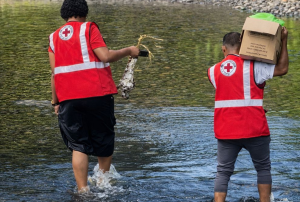
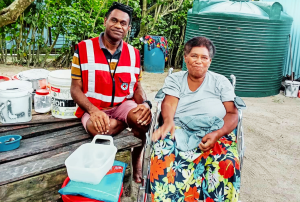
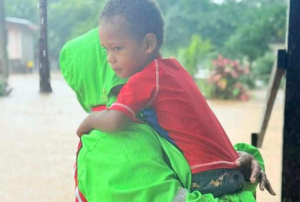
Between 2020 and 2024, Fiji was struck by a succession of tropical cyclones that tested our communities and our capacity in ways few nations experience in such rapid succession.
Tropical Cyclone Yasa made landfall on 17 December 2020 as a Category 5 cyclone — the most destructive to hit Fiji since TC Winston in 2016 — affecting an estimated 97,000 people across Vanua Levu. Barely six weeks later, TC Ana and TC Bina arrived back to back in January 2021, compounding the damage across all four divisions of the country. Then came TC Cody in 2022 and TC Mal in 2023, keeping communities in a cycle of response, recovery, and preparation that never fully ends.
The numbers behind these events are staggering. In the aftermath of TC Yasa and the Ana/Bina system alone, Fiji Red Cross provided assistance to over 40,500 people. That figure includes more than 13,000 people who received emergency shelter support, nearly 12,000 reached with water, sanitation and hygiene services, and thousands more supported through health activities and protection programmes. During TC Mal, Fiji Red Cross mobilised early to assist approximately 7,500 people across the Western, Central and Eastern Divisions.
Each one of those numbers is a family. A household where the roof came off. A child who went to sleep on a mat in an evacuation centre. A grandmother with no dry clothes and no way to cook.
Our volunteers were there for each of them.
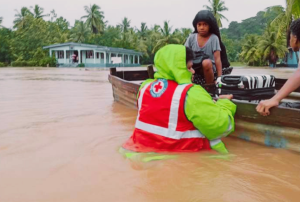
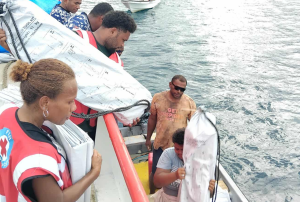
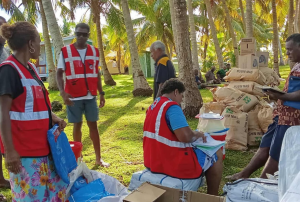
When a disaster strikes, we mobilise. But the real story of the Fiji Red Cross is not what we do after the storm. It is what we do every single day — quietly, consistently, and at considerable cost to those doing the giving.
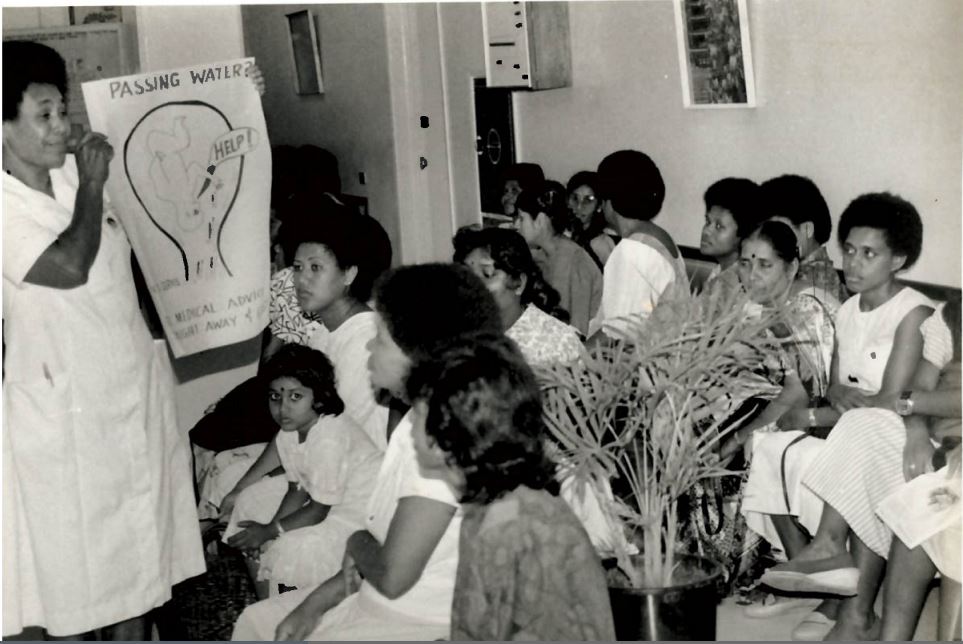
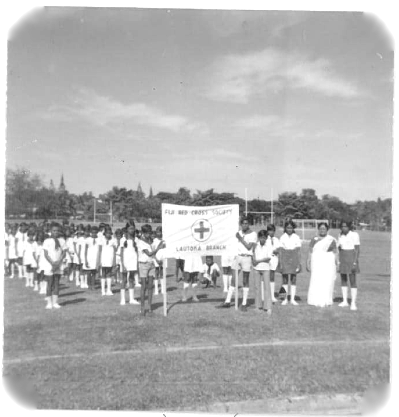
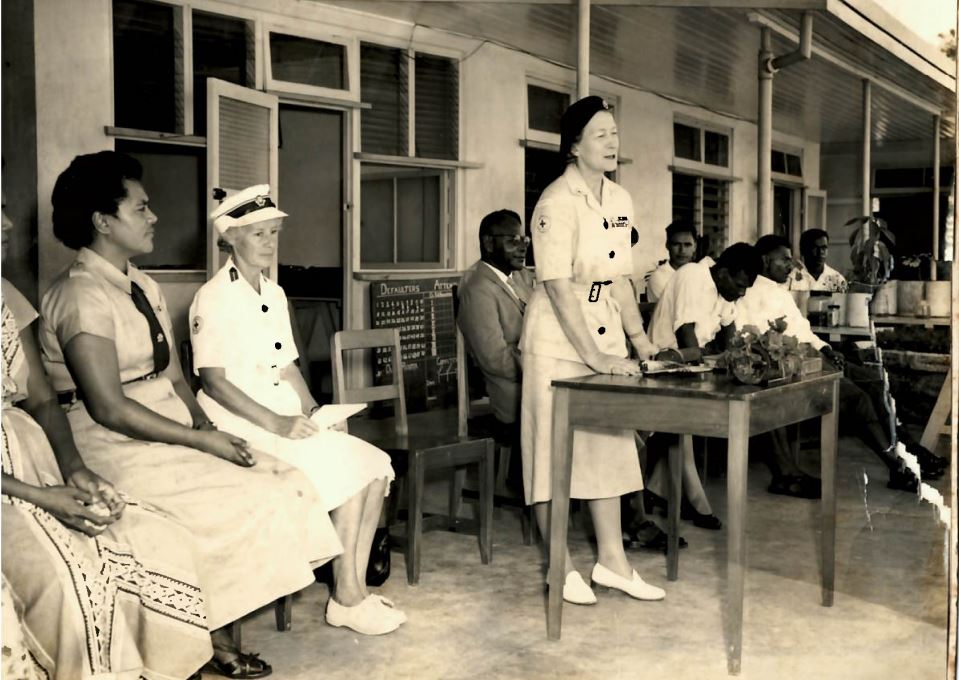
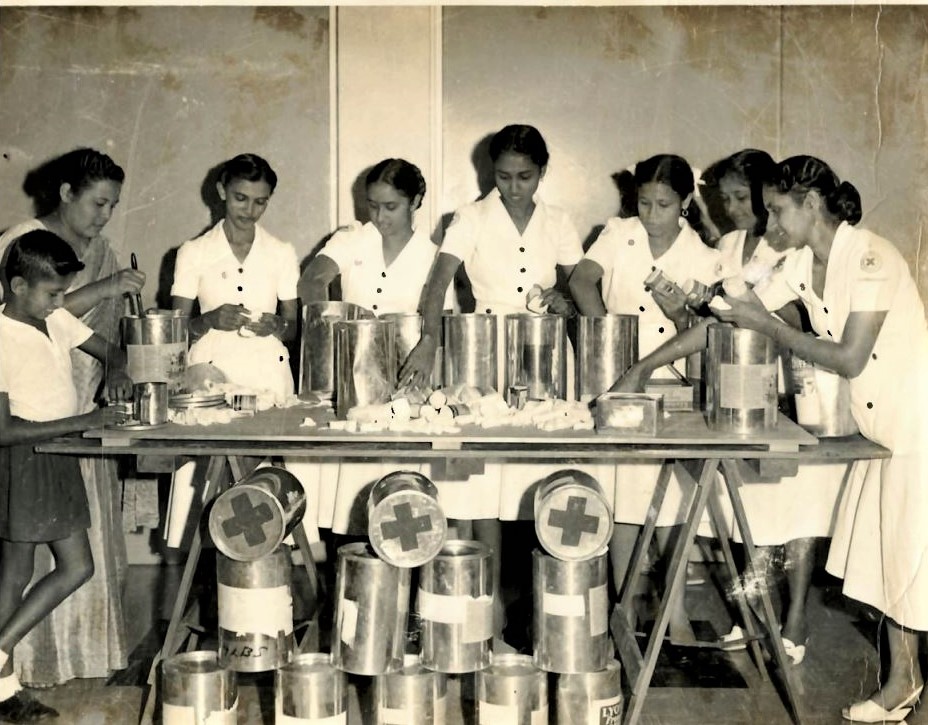
Our volunteers are the backbone of this organisation. With a network of over 1000 committed volunteers spread across our 16 Branches, the Fiji Red Cross reaches into corners of this country that no one else reaches. They are the ones who crossed rivers and hiked mountains to get hygiene kits to families cut off by floodwaters. They are the ones who sat with a grief-stricken community long after the cameras had gone.
Globally, the financial value of a single hour of volunteer time is estimated at USD $34.79 — a figure that has increased by 3.9% in the past year alone, reflecting the growing value that volunteers bring to society. Now multiply that across every training session delivered, every relief distribution coordinated, every evacuation supported. The contribution our volunteers make cannot be fully captured in numbers — but make no mistake, it is enormous.
Beyond disaster response, we train more than 3,000 people every year in First Aid and CPR. Three thousand people who go back into their workplaces, their schools, their villages carrying knowledge that can mean the difference between life and death in the critical minutes before an ambulance arrives. Over the past decade, that is more than 30,000 Fijians equipped with life-saving skills. In a country where a cyclone can cut off a community for days, that knowledge is not just valuable — it is vital.
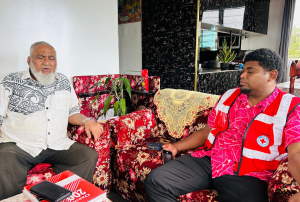
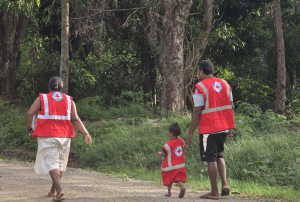
What We’re Doing — And Why It Matters
A National Clean-Up Campaign | 8–9 May
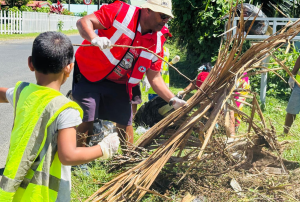
Picture this: across 16 Branches in Fiji — from Suva to Savusavu, from Labasa to Lautoka — our volunteers are lacing up their boots, pulling on their gloves, and stepping out into their communities.
They are not waiting to be asked. They are not waiting for a crisis to give them purpose. They are showing up — because a clean community is a resilient community. Because the environments we live in shape our health, our dignity, and our ability to recover when things go wrong.
The link between environmental health and humanitarian need is not theoretical. After a cyclone, debris becomes hazard. Blocked drains become floodways. Uncollected waste becomes a disease vector. We have seen this with our own eyes, across every one of the cyclones that has torn through Fiji in the last five years. Our volunteers understand this — because many of them have lived it.
The National Clean-Up Campaign is, at its core, a humanitarian act. It is our volunteers saying to their communities: We care about where you live. We care about the conditions you come home to. It is also our way of building the social fabric that holds communities together when everything else is falling apart — because the volunteer who helps clean your road this Saturday is the same person who will be there when the next storm hits.
This campaign is Branch-led, which means it is community-led. Our volunteers are the drivers. They are organising, planning, and executing this in their own backyard — for their own people.
But here’s what we want you to know — this campaign is not just for Red Cross volunteers.
We are calling on the general public — on you — to step outside with us. Walk alongside a volunteer. Pick up a bag. Show your community that you see it, that you value it, that you are willing to get your hands a little dirty for it.
In the lead-up to the campaign, we will be out in communities and engaging stakeholders to build awareness and momentum. Because cleaning up Fiji is not a one-organisation job. It is everyone’s job.
The clean-up runs from the 8th to the 9th of May — two days, 16 branches, one Fiji.
Come out. Be part of it. Join our volunteers as they do, in honour of our founder, what Henry Dunant always did — show up.
❤️ Wear Red | 8 May
On 8 May, we are asking you to do something simple, something powerful: Wear Red.
Not because it’s a trend. Not because it photographs well (though it does).
Wear Red because of what that colour means.
Red is the blanket wrapped around a child after the storm took her home. Red is the hygiene kit that kept a family safe when the water rose. Red is the first responder at 2am. Red is the volunteer who drove four hours to reach your village. Red is the blood given freely by a stranger so that someone else’s mother could live.
Red means hope. Red means protection. Red means shelter.
When you wear Red, you carry all of that with you. You shine a light on the communities still rebuilding — the ones you don’t always see in the news, the ones where the road still hasn’t been fixed and the water tank is still the only clean water for miles. You remind the people around you that there is a movement — right here, in Fiji — that sees those communities and refuses to turn away.
We are part of a global movement of 191 National Societies, all marking this day. When Fiji wears Red on the 8th of May, we add our voice to a chorus of millions. We say: we are here, we care, we will not look away.
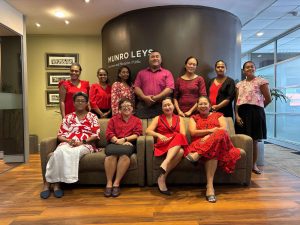
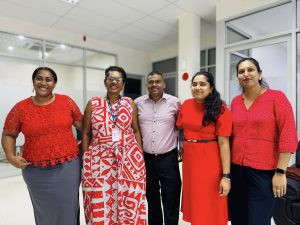
Thank you to Munro Leys, Digicel, DFAT, FBC and other organisations that showed up in Red last year.
So on 8 May, put on something Red. Then:
📸 Take a selfie. 📲 Post it. 🏷️ Tag us: @fijiredcross
Let’s flood social media with Red. Let’s make it impossible to scroll past. Let’s make the colour of hope impossible to ignore.
🏫 Schools & Organisations Outreach | 4–8 May
In the week leading up to World Red Cross Day, our teams will be on the move.
We’ll be visiting schools, businesses, government offices, and community organisations — carrying with us the story of the Red Cross movement, the values that drive our work, and a very important question:
Do you want to be part of this?
Because the truth is, the Red Cross is only as strong as the people who believe in it. When we train over 3,000 people in First Aid and CPR each year, we are not just teaching a skill — we are growing a network of people who are prepared, who are confident, and who will be there when it matters. That starts with awareness. That starts with a conversation in a classroom or a boardroom or a staffroom.
Every volunteer who joins us multiplies our reach. Every organisation that partners with us deepens our impact. Every student who learns about humanitarian principles today becomes a more compassionate leader tomorrow.
If you want our team to come to you — reach out. Tell us your school, your office, your organisation. We’ll come to you. We’ll talk about what we do, why we do it, and how you can be part of it.
And if the idea of becoming a Fiji Red Cross volunteer has been sitting quietly in the back of your mind — now is the time. We would love to have you.
Mark Your Calendar
| Date | Event |
| 4–8 May | Schools & Organisations Outreach — invite us to your space |
| 8–9 May | National Clean-Up Campaign — 16 Branches, volunteers and communities, together |
| 8 May | Wear Red Day — snap, post, tag @fijiredcross |
One Last Thing
Henry Dunant didn’t have a strategy document. He didn’t have a budget or a mandate. He had a battlefield, a conscience, and an inability to walk away from suffering.
Across Fiji’s four divisions, through TC Yasa and TC Ana, through COVID and TC Mal, through every flood and every storm surge — our volunteers have carried that same inability. They did not walk away. They showed up, again and again, to the tune of thousands of people assisted, millions of dollars of volunteer labour freely given, and more than 3,000 Fijians trained every year to carry the mission forward in their own hands.
This World Red Cross Day, we honour Henry Dunant by doing what he did: showing up.
We’ll see you out there.
Fiji Red Cross Society Serving humanity. Building resilient communities. Together. To get involved, follow us on social media @fijiredcross or contact your nearest Fiji Red Cross Branch. For outreach visits to your school or organisation during 4–8 May, reach out to us through our official channels.